
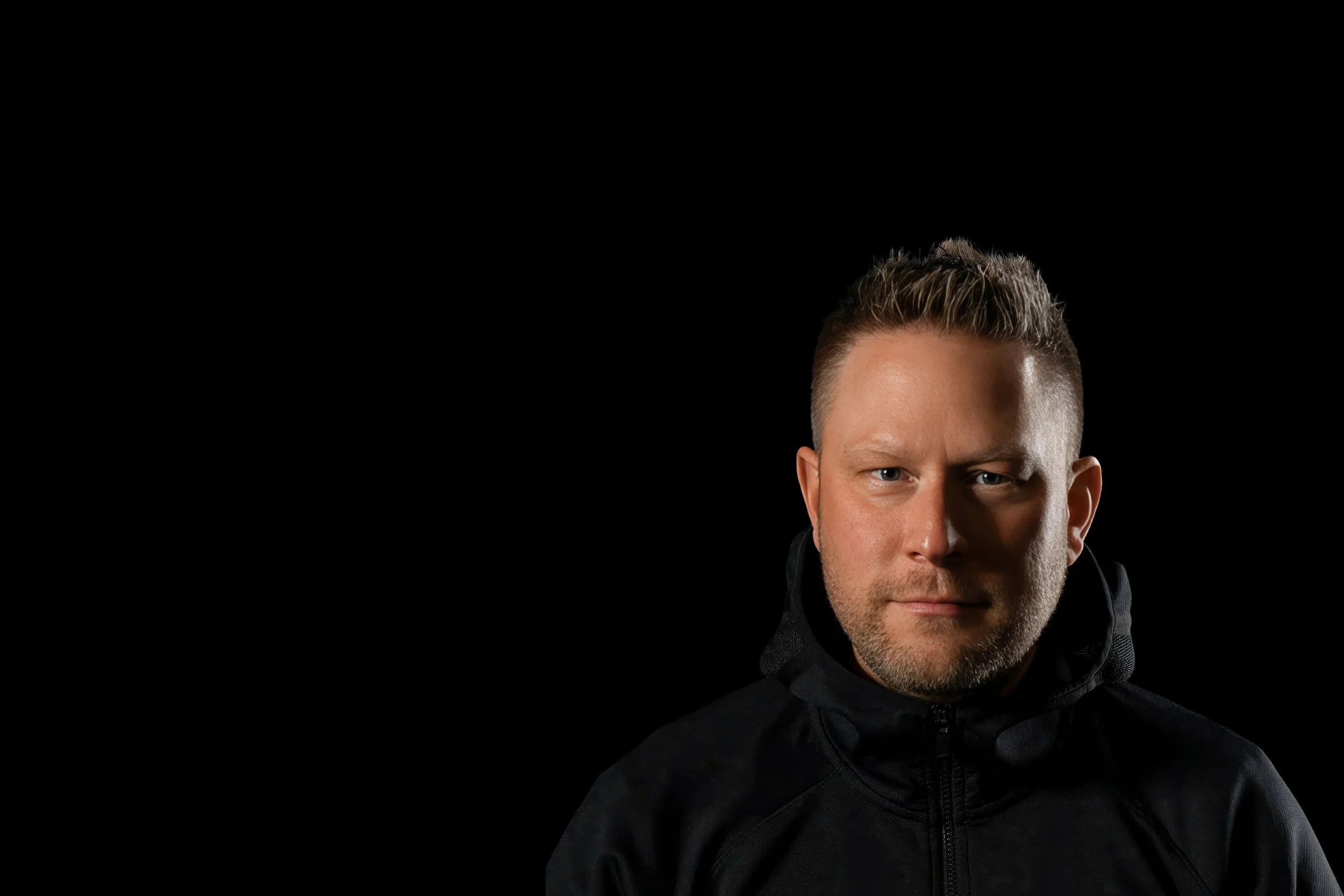
Founder · Author · Host
Jim
Detjen
Founder of Think First
Jim Detjen founded Think First to examine how perception, narrative, technology, institutions, and information environments shape what we believe—and how we exercise judgment.
- Founder
- Think First
- Author
- Distorted
- Host
- Think First with Jim Detjen
The founding question
How do we exercise sound judgment when perception itself is increasingly shaped for us?
One observation refused to go away: we rarely respond directly to reality. We respond to our perception of it.
Jim came to believe that one of the defining challenges of the twenty-first century would not be access to information, but the capacity to interpret it without surrendering responsibility for judgment.
Perception precedes belief.
Inquiry comes before certainty.
Judgment remains human.
Experience before the inquiry
The work began long before Think First had a name.
Military service, organizational strategy, publishing, and leadership all returned Jim to the same interval: what happens before a visible decision is made.
Service and discipline
Jim served in the 3d U.S. Infantry Regiment—The Old Guard—supporting presidential ceremonies and national memorial observances at the White House, Arlington National Cemetery, and the Tomb of the Unknown Soldier. He later served in the Utah Army National Guard and, following September 11, supported security operations connected to the 2002 Olympic Winter Games before attending the University of Utah.
Strategy and institutions
Over the next two decades, Jim worked with founders, global brands, educational institutions, nonprofit organizations, and leadership teams confronting growth, organizational change, strategic positioning, and cultural complexity.
The inquiry converges
Across those roles, he became increasingly interested in how we interpret change, decide what to trust, and construct the realities upon which organizations act. That interest became the intellectual ground beneath Think First.
The turning point
Every generation inherits new tools. Every generation must still learn how to use them wisely.
For years, Jim saw the gap between reality and perception across organizations, institutions, media, and public life. Then it became personal.
Watching his three children grow into adulthood during a period of rapid technological and cultural change transformed an intellectual observation into a question of immediate human consequence. That conviction became Think First.
The first place discernment was practiced
Long before Think First had a name, its founding principles were being tested at home—through marriage, parenthood, responsibility, disagreement, uncertainty, and the work of preparing children to meet demanding institutions without surrendering character or independent judgment.
A family shaped by inquiry and service
Jim and his wife have spent nearly three decades raising a family through rapid technological and cultural change. Their family’s path now intersects with Harvard University and the United States Air Force Academy, where scholarship, military service, leadership, and disciplined inquiry continue across generations.
The public work
One inquiry. Distinct expressions.
Think First carries the work into conversation, publishing, research, and practical methods—each serving a distinct role without collapsing into the others.
Jim Detjen · Think First